
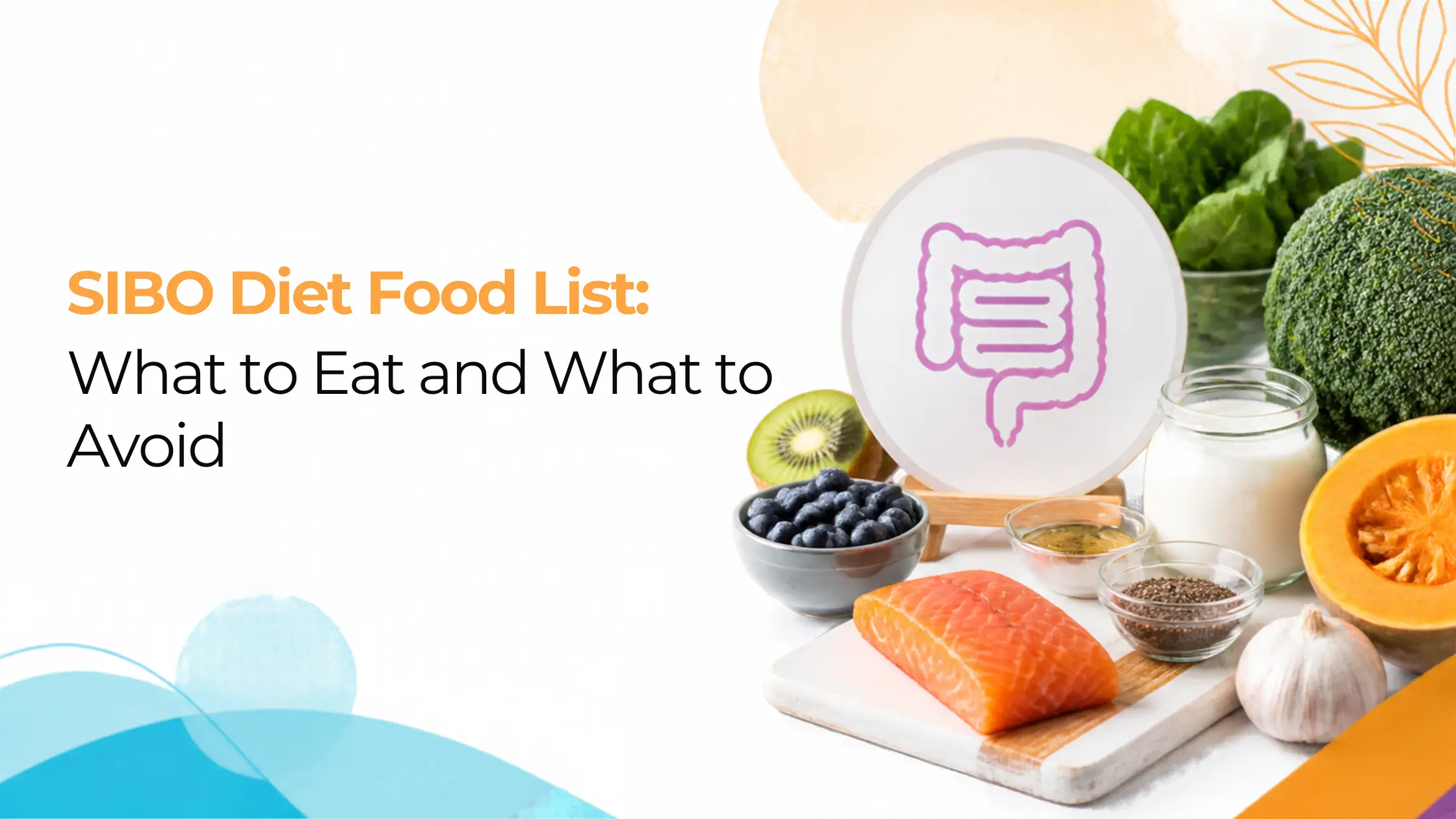
A helpful SIBO diet food list focuses on foods you can tolerate, not a permanent set of strict rules. Many people start with familiar proteins, grains, and selected produce, then adjust their choices with a clinician or dietitian as symptoms change. The aim is to manage discomfort while maintaining a varied, nutritious diet.
What is the SIBO diet meant to do?
Small intestinal bacterial overgrowth (SIBO) occurs when excessive bacteria build up in the small intestine, where they can interfere with digestion and nutrient absorption. It may cause symptoms such as bloating, gas, abdominal discomfort, and changes in bowel habits.
A SIBO diet may help manage these symptoms, but it does not reliably eliminate bacterial overgrowth. Its main purpose is to support symptom relief while maintaining adequate nutrition.
That distinction matters when following a SIBO diet. Evidence for low-FODMAP eating comes mainly from IBS research, not SIBO studies. Food changes should complement, not replace, medical care.
Which foods are usually easier to tolerate?
Start with familiar ingredients and use portion size as your first guide. The following options are commonly included in a low-FODMAP eating approach, but individual tolerance still matters.
| Food group | Options to try | Practical note |
|---|---|---|
| Protein | Eggs, plain chicken, fish, turkey, firm tofu | Choose plain options |
| Grains and starches | Rice, quinoa, oats, potatoes, corn tortillas | Check product labels |
| Vegetables | Carrots, cucumber, spinach, lettuce, zucchini | Cook if raw feels difficult |
| Fruit | Kiwi, oranges, grapes, strawberries, pineapple | Start with one serving |
| Dairy | Lactose-free milk, hard cheese, suitable almond milk | Check for inulin or sugar alcohols |
| Flavour and fats | Olive oil, ginger, chives, garlic-infused oil | Alternatives to onion and garlic |
These are examples to try, not guaranteed safe foods. Start with one portion at a time and introduce other options as your tolerance allows. The most suitable choices are those that provide adequate nutrition without worsening your symptoms. Adjust portions and ingredients as your needs change.
Which foods may trigger symptoms?
Foods to avoid for SIBO often include carbohydrates that ferment quickly and may increase gas or fluid. Many are high-FODMAP, but reactions differ with portion size, preparation, and personal tolerance.
- Onion and garlic: Found in onion powder, garlic cloves, and seasoning mixes. Chives, green onion tops, and garlic-infused oil may be alternatives.
- Certain fruits: Apples, pears, mangoes, watermelon, and dried fruits may trigger symptoms. Kiwi, oranges, and grapes may be better tolerated.
- Wheat and rye: Some wheat- and rye-based foods contain fructans that may trigger symptoms. Rice and quinoa may be easier to tolerate. Gluten does not need to be eliminated unless medically necessary.
- Certain vegetables: Cauliflower, mushrooms, and asparagus may cause discomfort. Carrots, spinach, and zucchini are other options.
- Legumes: Beans, lentils, and chickpeas may be difficult to tolerate, especially in larger servings. Firm tofu or small portions of rinsed canned legumes may work better.
- Lactose-rich dairy: Regular milk, ice cream, and some yogurts can trigger symptoms. Consider lactose-free milk or hard cheese.
- Sweeteners: Sorbitol, mannitol, and xylitol, commonly found in sugar-free sweets, may increase gas. Sugar or maple syrup may be alternatives if tolerated.
These foods are not automatically off-limits. Portion size and individual tolerance play an important role in how you respond. When checking packaged sauces and snacks, look for ingredients such as onion, garlic, inulin, honey, and polyol sweeteners, which may be easy to overlook.
How does a low-FODMAP approach fit SIBO?
A low-FODMAP approach temporarily reduces certain carbohydrates that may contribute to gas and bloating. It may help manage SIBO-related symptoms, but it does not cure bacterial overgrowth or serve as a lifelong diet.
FODMAP stands for fermentable oligosaccharides, disaccharides, monosaccharides, and polyols. These carbohydrates are found in foods such as wheat, onions, milk, and apples.
A low-FODMAP plan should be individualized, especially if you have lost weight or already restrict foods. Gluten does not need to be eliminated automatically, as wheat-related symptoms may be linked to fructans, while lactose is the FODMAP found in some dairy products.
The AGA recommends reintroducing foods after four to six weeks, with dietitian guidance. Long-term restriction can limit dietary variety and nutrient intake, so the plan should be reviewed and adjusted regularly.
What can a realistic day of meals look like?
A workable menu does not need specialty ingredients. Build meals around a protein, familiar starch, and produce you tolerate. Adjust portions to your appetite and rotate ingredients to keep your options varied.
| Meal | Simple combination |
|---|---|
| Breakfast | Oatmeal with lactose-free milk and kiwi |
| Lunch | Grilled chicken, rice, cucumber, and carrot |
| Snack | An orange or a small serving of tolerated nuts |
| Dinner | Baked fish, roasted potato, and sautéed spinach |
Eggs with rice and cooked vegetables are another simple combination. A dietitian can help you decide what to eat with SIBO as your symptoms and tolerance change. There is no single SIBO-specific diet that suits everyone, as bowel changes, food sensitivities, and nutritional needs all influence what may work.
How to Create a SIBO-Friendly Food Plan
Change your diet gradually rather than removing many ingredients at once. A simple, time-limited plan makes patterns easier to spot while keeping meals varied and nutritionally balanced for everyday living.
- Confirm the diagnosis. Discuss symptoms and testing with a healthcare professional instead of using a food list to diagnose SIBO.
- Choose a simple starting point. Build meals around foods you already tolerate rather than copying an extremely restrictive diet online. Your starting plan should reflect your symptoms and nutritional needs.
- Agree on a trial. If your clinician suggests a low-FODMAP approach, establish its purpose, duration, and review date before starting.
- Bring foods back. Reintroduce one food or category at a time, in planned portions, to learn what you can comfortably eat.
- Check your nutrition. Ask whether you need assessment for deficiencies, particularly with ongoing diarrhea, weight loss, or poor absorption.
A food diary can help you identify which ingredients and portions may contribute to symptoms. Use your notes to make practical adjustments to meals at home and when eating out, rather than following a rigid list of restrictions.
What does the research say about restrictive diets?
Evidence for restrictive diets as a SIBO treatment is still developing. Diet may reduce symptoms, but it does not replace medical care or clinician-led treatment, so it is best used with guidance.
In a 2026 online survey of 98 adults with IBS and/or SIBO or intestinal methanogen overgrowth, only 43.9% reported completing the low-FODMAP diet. Diagnoses were mixed, and responses were self-reported, so this is not a SIBO-specific success rate.
The aim is to find an approach that helps manage symptoms without unnecessarily limiting food choices or affecting nutritional health and quality of life.
FAQs
Can diet alone get rid of SIBO?
No. Food changes may reduce symptoms, but they are not a reliable cure for bacterial overgrowth. A clinician can review the diagnosis and underlying causes.
Is rice allowed on a SIBO diet?
Plain rice is generally low in FODMAPs. Start with a comfortable serving, since larger portions may not suit everyone.
Do I have to stop eating gluten and dairy?
Not necessarily. Gluten itself is not a FODMAP, and lactose-free dairy or hard cheese may suit some people. Avoid foods for a clear personal or medical reason.
How long should I follow a low-FODMAP plan?
The strict phase is usually short, commonly around four to six weeks, followed by planned reintroduction. A dietitian can help expand your choices rather than keeping you restricted.
Are probiotics recommended with SIBO?
Evidence is mixed, and supplements affect people differently. Discuss them with your clinician before adding a product, especially if you take other medicines.
When should I get medical advice?
Seek care for persistent symptoms, weight loss, blood in stool, fever, or dehydration, especially if symptoms are severe or getting worse.
Find a More Manageable Approach to Eating
Managing digestive symptoms can make even ordinary meal choices feel complicated. Inner Health & Wellness can help you explore nutrition strategies that account for your food preferences, digestive concerns, and nutritional needs. The goal is to make informed food choices without turning every meal into a list of restrictions.